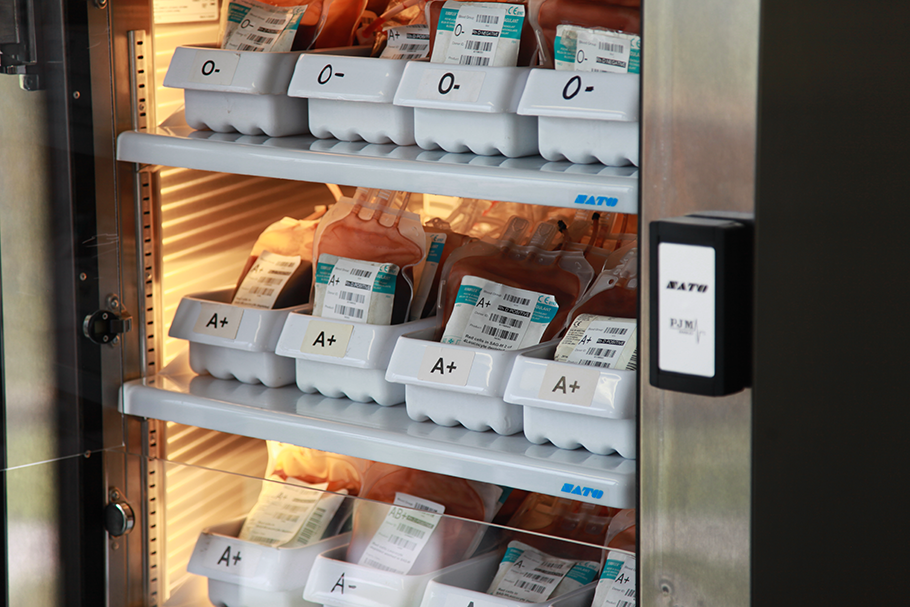
SATO Healthcare offers products such as patient wristbands and PJM RFID labels, helping hospitals and clinical sites transform their operations digitally and ensure their patients receive precise, accurate care. It contributes to improving patient care and safety — a top priority for health service delivery worldwide.
Patient Care and Safety
RFID wristbands for easy patient identification
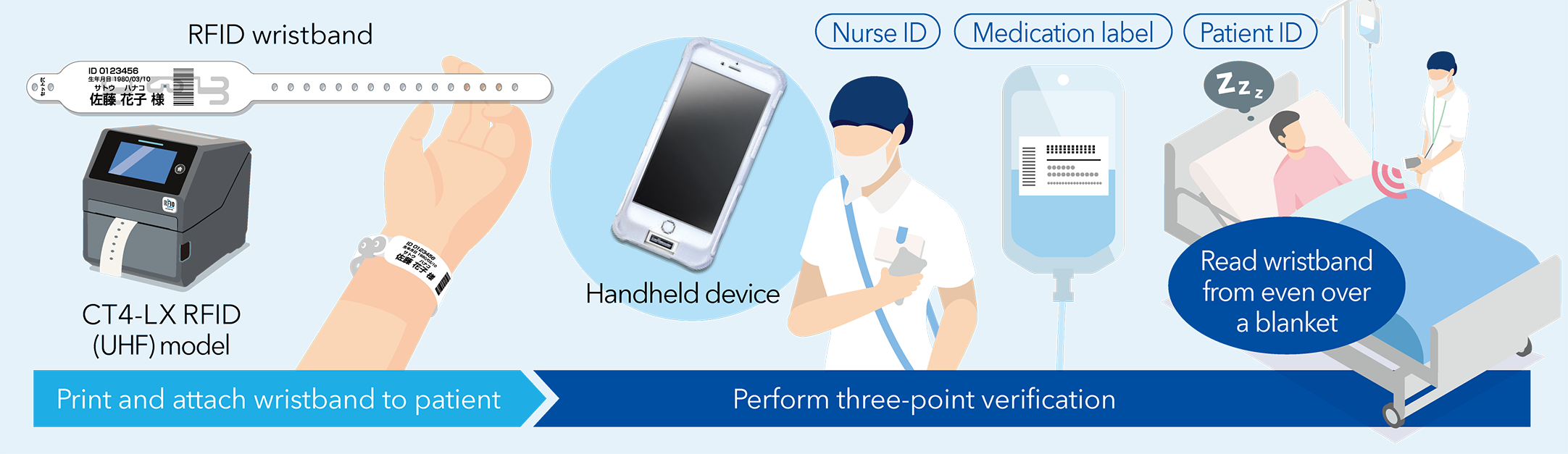
Reading conventional wristbands requires health care workers to locate the barcode on the patient’s wristband and align it with the scanner. This not only disturbs patients who are asleep but also takes time and creates added stress for nurses, especially at night when fewer staff are on duty. By contrast, RFID wristbands can be scanned even when they are not clearly visible, like from under a blanket. With RFID, staff can perform three-point verification — as mandated by Japan’s health ministry — to manage and record who administered which drug to which patient, in a quick and accurate manner, making IV checks 80 percent faster than before. Because RFID wristbands can identify patients in a contactless manner, they also reduce risks of infection from staff-to-patient contact and improve hygiene.
PJM RFID labels for blood bag management
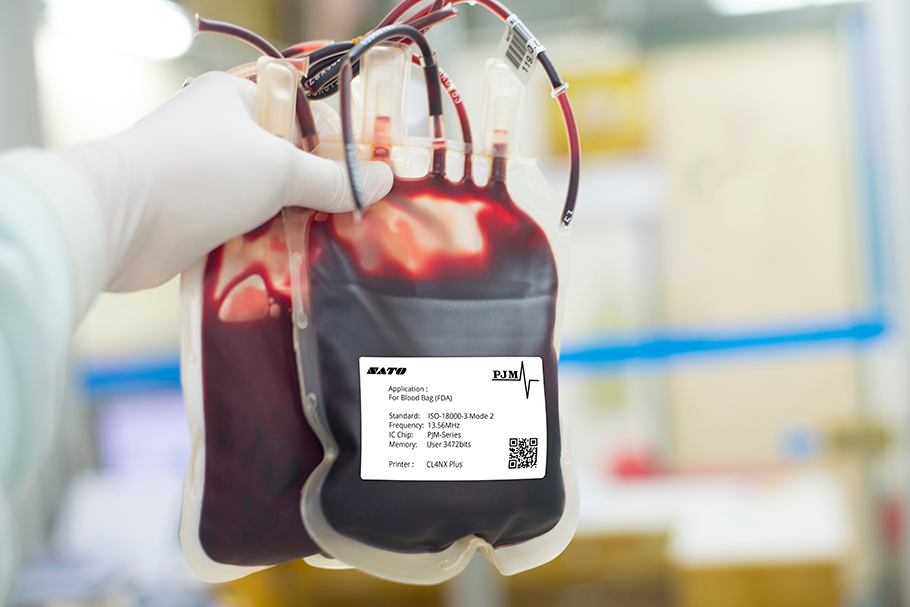
PJM (Phase Jitter Modulation) is a high-speed, high-precision RFID technology compliant with international standards. Unlike other RFID, PJM offers reliable reads in stacked conditions and in the presence of liquids and metals, making it suitable for tracking medical device loan kits and high-value inventory. And because PJM RFID labels are designed to withstand sterilization processes using electron beams, gamma rays and X-rays, they are perfect for managing blood donation bags at the item level to enhance traceability across the blood supply chain.