

For a long time, economies have operated on a "take-make-dispose" model, which depletes natural resources rapidly and contributes to waste and environmental strain. This leads to climate change, destruction of ecosystems, a shortage of dump sites and many other problems. Solving these problems requires switching to a circular model that focuses on reducing material use and recapturing waste as resources. As circularity becomes the norm worldwide, we are working to embed it into our product design and development.
Data-driven Circular Economy

However, the transition to a circular model presents a range of challenges. From a technological perspective, improving the quality of recycled materials produced from waste is essential. This requires more advanced sorting and disassembly technologies. From an economic perspective, the cost of waste collection and processing must be kept low enough to enable efficient conversion into a stable supply of recycled materials for their buyers. Companies also have to work together to link and utilize data across the supply chain while designing their products for recyclability right from the start.
All these challenges need to be addressed holistically, and SATO can help. We have decades of know-how in providing solutions that connect people and things with data and use optimal auto-ID technologies to digitize this data for customers’ worksites.


For example, we can leverage our expertise and experience in food traceability solutions to help waste management and recycling companies track and collect data at each step of their value chain. Such traceability systems are important for converting waste into recycled materials at consistent quality and with verifiable origins, so that they can be supplied to manufacturers who need them to reduce their carbon footprint and meet stricter environmental regulations.
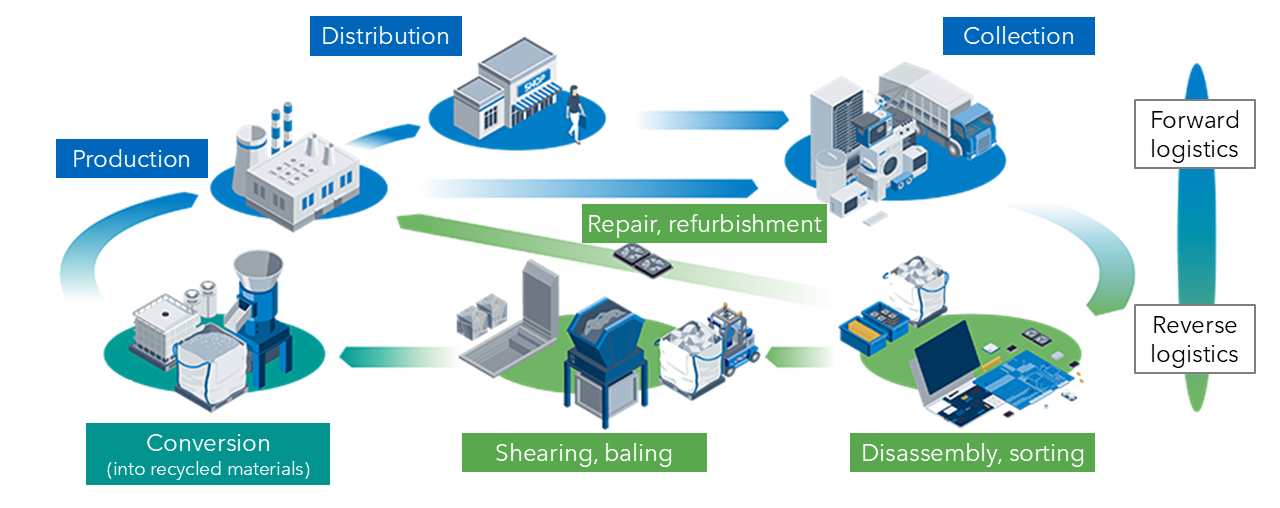
We can also use our tagging know-how and auto-ID experience to integrate digital product passports (DPPs) into our customers’ operations. DPPs utilize technologies such as two-dimensional barcodes or RFID tags to store and share digital information that tracks a product’s entire lifecycle. Designed to promote transparency and circularity across global supply chains, DPPs are expected to become mandatory for more product groups over the next few years.
SATO serves customers in diverse industries and will continue delivering solutions that meet different needs for traceability and product lifecycle transparency to contribute to the circular economy.